
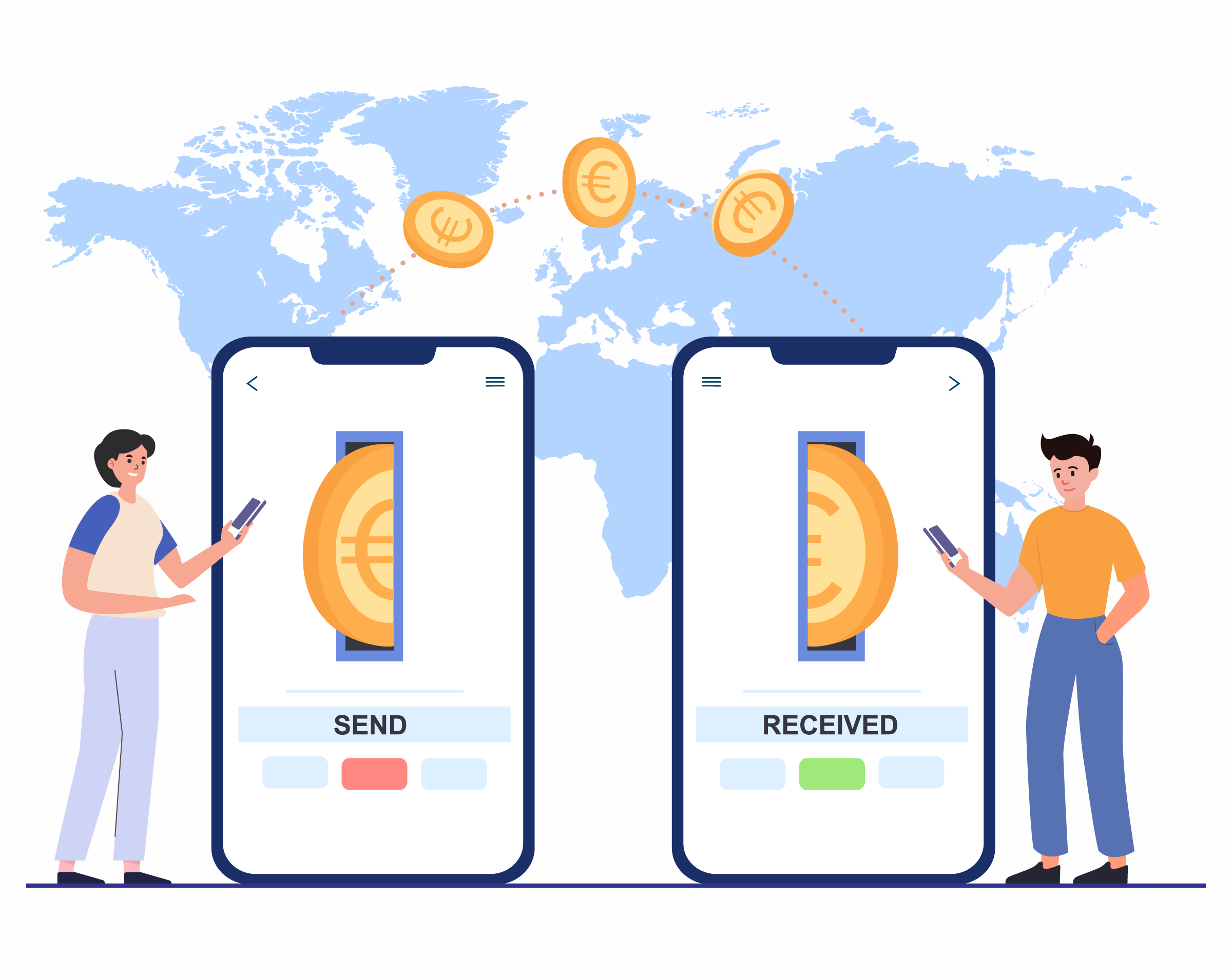
Bank transfers are the backbone of how money moves between people, businesses and institutions in Cyprus and around the world, powering everything from everyday bill payments to large corporate transactions.
They offer a secure, traceable and convenient way to send and receive money without handling cash, whether you are paying rent, settling invoices or funding investments.
Understanding how bank transfers work, the different types available and the specific rules that apply in Cyprus helps you choose the most efficient option, avoid unnecessary fees and keep your payments safe.
What is a bank transfer?
A bank transfer is the electronic movement of money from one bank account to another, usually using secure payment networks instead of cash or cheques. It is a core financial service for individuals and businesses, supporting salary payments, supplier invoices, rent, subscriptions, tax payments and many other routine obligations.
In modern commerce and personal finance, bank transfers are essential because they provide a regulated and relatively low‑cost way to move funds domestically and internationally.
How do bank transfers work?
A typical transfer follows a sequence: you initiate the payment (online, mobile, or in‑branch), the bank verifies your identity and checks funds, the payment is processed through a clearing system and finally the money is credited to the recipient. The sender’s bank debits the account and sends payment instructions, while the recipient’s bank receives those instructions and credits the beneficiary’s account.
For more complex or cross‑border transfers, intermediary or correspondent banks may sit between the two institutions to route funds via networks such as SWIFT. Account details like IBAN (International Bank Account Number) and BIC/SWIFT codes allow banks and clearing systems to identify the exact account and institution so the transfer reaches the correct destination.
Is a bank transfer instant?
The speed of a bank transfer depends mainly on the transfer type and the payment rail used (for example, SEPA Credit Transfer, SEPA Instant, or SWIFT). Instant payment schemes such as SEPA Instant Credit Transfer can process transfers in seconds or within a few minutes, whereas standard SEPA or SWIFT transfers typically take from 1 to 3 business days and sometimes longer for complex cross‑border routes. Timing factors such as cut‑off times, weekends, public holidays, compliance checks and whether the payment is international or domestic can all slow down processing.
How to make a bank transfer?
To make a bank transfer, you generally log in to your online banking or mobile app, choose the transfer option, enter the recipient’s details, confirm the amount, review the information, authorise the payment and then receive a confirmation.
The required information usually includes the recipient’s full name, IBAN, bank name, possibly the BIC/SWIFT code for international transfers, the transfer amount and a payment reference or description that appears on both account statements.
Banks apply verification methods such as login passwords, biometrics, one‑time passcodes (OTP), or security tokens to authenticate you and comply with strong customer authentication rules. After authorisation, you normally see an on‑screen confirmation and can download or email a receipt, while the transaction also appears in your online banking history for tracking.
How to make a bank transfer from an Ancoria Bank account?
Ancoria Bank customers can initiate transfers via the myAncoria online banking platform, the mobile app, or by visiting a banking centre in Nicosia, Limassol or Larnaca. In digital channels you select “Create a new payment” or “Pay a contact from my list”, enter the beneficiary’s name, IBAN (and BIC/SWIFT for non‑SEPA), amount, choose channel (SEPA, SWIFT), then review and authorise the payment using the bank’s security procedures.
You can find Ancoria Bank’s Table of Commissions & Charges here.
Can you transfer in different currencies?
In Cyprus and across the EU/EEA, euro (EUR) transfers are the standard for domestic and SEPA payments and EU rules require that cross‑border euro transfers cost the same as domestic ones. Cross‑currency transfers, such as sending Dollars (USD) or British pounds (GBP) from a euro account, require currency conversion either by your bank, by an intermediary bank, or by a specialist provider. When this happens, the exchange rate used usually includes a markup above the mid‑market rate and additional conversion or SWIFT handling fees may apply.
What are the transaction limits in Cyprus?
Banks in Cyprus set their own transfer limits depending on account type, customer profile and the specific payment channel (online, mobile, banking centre). For personal online SEPA transfers, many institutions impose daily or per‑transaction caps, though exact thresholds vary by bank and can change over time.
Business accounts typically have significantly higher or customisable limits and banks may raise caps for corporate clients after risk assessment.
If standard limits do not meet your needs, you can usually request an increase by contacting your bank or relationship officer, who will explain the eligibility criteria and documentation required.
Are bank transfers safe?
Bank transfers are designed as secure electronic transactions, using regulated payment infrastructures rather than open consumer networks. Banks apply layered security including encryption of data in transit, strong customer authentication, transaction signing, device fingerprinting and automated fraud‑detection systems that monitor for unusual patterns.
In Cyprus, banks are supervised under EU banking directives and local regulation and must comply with payment services rules (such as PSD2) and anti‑money‑laundering requirements that impose strict safeguards on how payments are processed.
Despite this, you remain responsible for verifying that the recipient’s details, especially IBAN and name, are correct before sending money, because banks generally process payments based on account identifiers. It is also important to stay alert to phishing emails, phone scams and social‑engineering attacks that try to trick you into sending funds to fraudsters under false pretences.
Can bank transfers be traced?
Every bank transfer is recorded with transaction identifiers, timestamps and reference numbers on the banking systems and in payment network logs. Banks can trace transfers by following SEPA or SWIFT messages across clearing and settlement mechanisms and, if needed, by contacting intermediary or correspondent banks involved in the route.
As a customer, you can usually see basic tracking information, such as status, value date and reference, through your online banking transaction history or account statements. For international transfers that pass through several intermediaries, a formal trace can be raised and each bank in the chain is asked to confirm where the funds are, which may take several business days.
Complex investigations, especially in cases of suspected fraud or compliance checks, can extend the tracing process before a final outcome is reached.
Can bank transfers be reversed?
Whether a bank transfer can be reversed depends heavily on timing and the stage of the transaction. Once an instant payment has been successfully processed and the funds are available to the beneficiary, it cannot normally be unilaterally reversed by the sender because settlement is final.
For standard SEPA transfers, recall is sometimes possible if the bank is notified quickly, such as in the case of a technical error or duplicate payment, but success depends on whether the beneficiary’s bank has already credited and released the funds.
Banks operate dispute and refund procedures for fraud or serious error, where you can submit a claim and the institutions investigate under scheme rules and consumer‑protection legislation. However, once you have authorised a legitimate payment and it is fully settled, your authorisation cannot simply be undone, which is why you should carefully verify recipient details and payment references before confirming.